
How to Light Your Living Room for Everyday Living
Collaborative post
A living room is a part of the home like no other. While its main function is for relaxing, it can also be a place to work, dine and play.
There’s lots to look at when it comes to the living room design process. You’ve got the flooring, wall coverings, furniture and decorations to think about. Then you have to decide on a style, which in turn, should complement the rest of your home.
Another aspect that’s just as important is your lighting. It’s not always the first thing on the list, but it plays a huge part in tying the room together throughout the day. Read on to learn how to light your living room to get the best out of the space.
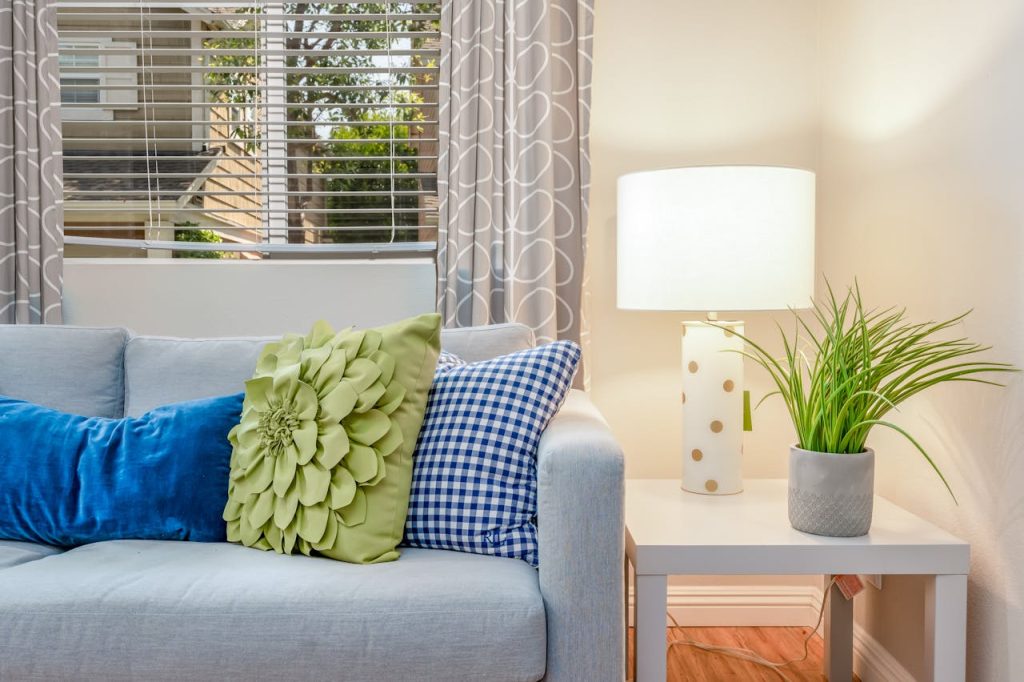
Think about how you use the room
Nobody knows your schedule like you, so think about how you actually use your living room. We often use our living rooms to relax after a long day, and it’s also where we spend time with friends and family.
When it comes to choosing living room lights, you need flexibility. During the day that’s not a problem, but in the evenings, you need general lighting as well as other types to work together.
If your room has a dining table, or you use it for work, task lighting becomes a must. This will help you to see what you’re doing, without having to strain or make mistakes.
The sofa area, which is usually placed in front of the TV, is where dimmable lights become much more essential. They allow you to control the mood as you see fit.
Then there’s accent lighting, which is great for highlighting specific features of the room such as artwork, photos or decorations.
Build up more than one source of light
One light alone won’t be able to suit every purpose. That’s a mistake a lot of homeowners make – relying on a main ceiling light to do all the work.
Think about times when the people in the room are doing different things. One person could be watching TV, while another is reading. Those activities are best suited for different types of lights.
A floor lamp gives the person reading directional task lighting, allowing them to see pages clearly without being too overpowering. For those watching TV, wall sconces or table lamps provide soft, diffused light that can bounce off walls and ceiling, not the screen.
You don’t need every single type of light or lamp available. Instead, it’s all about finding a good balance between the light, layout, decor and the task or activity at hand.
Ideally, aim for around two or three light sources, though this will vary depending on the size of your room. These might be a central pendant or semi-flush fitting, a floor lamp beside the sofa, and a table lamp on a coffee table.

Ace your main ceiling light
Though it doesn’t act alone, a ceiling fixture is essentially the foundation of the room’s lighting scheme. As the main focal point, it needs to be able to do many jobs.
The problem is that not every type of ceiling light will be suitable for your exact room. The size, and crucially the ceiling height, needs to be considered before you decide on a specific fixture.
A deep hanging chandelier wouldn’t suit small living rooms with low clearance, no matter how grand the design. Larger rooms shouldn’t be defined by a single large light either; that’s where you can take advantage of using multiple fixtures.
Here are some suitable pairings to explore:
- Small rooms: Compact pendants or semi-flush lights can work well, with enough room for a table lamp beside the sofa. You don’t necessarily need a compact design; a larger light with an open frame can make a statement without seeming too bulky.
- Large rooms: Chandeliers or multi-arm fittings can provide a stunning focal point when supported by lamps. In a long or open-plan room, separate ceiling lights can work better in different areas compared to one oversized central light.
- Rooms with low ceiling height: Flush and semi-flush lights sit close to the ceiling, giving you more clearance. Examine the light’s total drop before buying, especially if it’s in an area where people will walk underneath it.
- Rooms with extensive furniture: If your room already has plenty of detail, it may be best to opt for a simpler design instead. Wall lights can be used to provide extra lighting amongst tables and floor space that’s occupied, although they need to work around any tall furniture like cabinets or shelving.
This goes back to how you use the room as well as its layout and furniture. Once you take all of this into account, choosing a fitting becomes much easier.
Making the room feel cosier in the evening
As the way you use your home changes throughout the day, so does the need for lighting. For example, bright light can be helpful during the afternoon, but you might prefer something softer in the evening. The most effective lighting schemes are adjustable, with the ability to change depending on the mood and time of day.
Dimmers certainly have their place, as well as the type of fixture, but what really makes an impact is the type of bulb you use. Bulbs come in a range of colours and designs. LED light bulbs are the most popular, available in a range of brightness levels and colour temperatures, with smart versions for additional control.
As a measurement, lumens describe light output, watts describe electricity consumption, and kelvin (K) measures colour temperature. It helps to separate these choices: do you want a warmer-looking light, less brightness, or both?
To keep your lighting balanced, try similar colour temperatures, so one doesn’t look noticeably cooler than the others.

Improve natural light during the day
Before adding more lights to the room, it’s worth looking at how much daylight it actually gets. You may find there’s a cabinet that blocks part of a window, or your curtains cover more of the window than you realise. A small adjustment can help without changing the whole layout.
Your window decor can also impact the light too. Heavy curtains are useful for when you want privacy and can be paired with sheer curtains to soften direct sunlight. Adjustable blinds are another popular option, allowing you to control how much light gets through at different times.
Mirrors can also help reflect daylight into the room as well as act as a decorative piece. While you get the best of both worlds, their position matters, so you need to look at what the mirror will reflect before deciding where to hang it. You don’t want it to redirect bright sunlight towards the TV or the spot where you usually sit.
Lighter walls and furnishings can also reflect more of the available light. Look at the room in the morning and again later in the afternoon. It’ll give you a better idea of where daylight is useful and where a lamp may be needed.
Quick changes that don’t need a full makeover
You don’t always need to splash out on new fittings to improve the lighting of your living room. Hold off on the spending initially, and try moving a lamp you already own.
A table lamp that does little on a sideboard could be more useful elsewhere. If that doesn’t solve the problem, there are a few changes you can consider:
- Check the bulb: Work out whether the light is too bright, dim or cool for the room before choosing a replacement.
- Try a different shade: It could be blocking light where you need it. A replacement may add a new effect without replacing the whole lamp.
- Add a reading light: If you regularly read in one spot, a plug-in lamp with an adjustable head could help. Check that you have room for it and a socket within reach first.
- Look at dimmable options: A lamp with its own dimmer is much more flexible depending on how the room is used.
- Make switches easier to use: A suitable smart plug can let you turn a lamp on and off remotely if the switch is awkward to reach. Just bear in mind that an ordinary on/off smart plug won’t also dim the bulb.
Try one change at a time; there’s no need to replace several lights if moving one gives you the result you wanted.
Next time you settle down in the living room, think of where the lighting falls short. Even just a few tweaks can turn your living room from bland to beautiful.
