
Conker Crafts and Games: Fun Autumn Nature Activity for Kids
Conkers – the shiny brown seeds of the horse chestnut tree – are free, easy to find on autumn walks, and perfect for nature crafts, simple science experiments, and the classic string game of conkers.

Conker Fun: At a Glance
| Activities covered: | Collecting conkers, making conker creatures, and playing the traditional game of conkers |
| Suitable for: | 5–10 years (younger children will need adult help with threading string and making holes) |
| Time needed: | 15–20 minutes to collect conkers; 20–30 minutes for conker crafts; 10 minutes to set up the game |
| Difficulty: | Easy – a great low-cost, low-mess nature activity for beginners |
Autumn is one of the best times of year to get outside for a bit of nature play. As the weather cools, trees begin dropping their seeds, and if you head out for a walk you’ll likely spot them scattered on the ground beneath the branches. Some of these seeds will take root and grow into new trees, while others become a tasty snack for birds, squirrels and other local wildlife.
Among the most exciting seeds to find are conkers; the glossy brown seeds of the horse chestnut tree. They’re free to collect, satisfying to hold, and endlessly versatile once you’re home. Whether you fancy transforming them into quirky conker creatures or challenging a friend to a traditional game of conkers, this guide has everything you need for a fun autumn crafts session.
Fun Conker Facts
- Conkers aren’t actually chestnuts. Despite the name mix-up, conkers come from the horse chestnut tree, while the chestnuts we roast and eat come from a completely different tree, the sweet chestnut.
- Conkers were once used in the war effort. During the First World War, children across Britain were encouraged to collect conkers so the starch inside them could be processed into acetone, a chemical used in making cordite for ammunition.
- Spiders are said to avoid them. For generations, people have placed conkers in corners of rooms and near doorways in the belief that spiders steer clear of them, although scientists have never found solid proof that it actually works.
- The horse chestnut tree isn’t native to Britain. It originally comes from the mountains of the Balkans and was only introduced to the UK in the late 16th century.
- There’s an official World Conker Championships. Held every October in Northamptonshire, competitors of all ages travel from across the world to battle it out with their best conkers.

Gathering Your Conkers
Horse chestnut trees are common in parks, woodlands and along tree-lined streets, so a conker hunt makes a lovely excuse for a family walk. If you’re not sure how to spot one, it helps to look up a picture of its distinctive large, hand-shaped leaves before you head out, so you know exactly what you’re looking for.
Early autumn is generally the best time to search, when the spiky green cases have started splitting open and dropping their contents around the base of the tree. When choosing your conkers, look for ones that are firm, glossy and free from cracks or holes; these will last longest and work best for conker crafts and games alike.

How to Make Conker Creatures
Turning conkers into quirky characters is a great nature crafts for kids to try, and there’s no right or wrong way to do it. You don’t need to copy a real animal – let your imagination lead the way and see what kind of creature you end up with.
You will need:
- Conkers in various shapes and sizes
- Blunt darning needle
- Wooden cocktail sticks or wooden craft matchsticks
- Acrylic paint or permanent markers
- String
- Scissors
- Googly eyes (optional)
- Pipe cleaners (optional)

To join two conkers together, carefully make a small hole in each one using a cocktail stick or a blunt needle. This part is a job for the grown-ups.
Push a cocktail stick or matchstick into one hole, then press the other end into the hole in your second conker to connect them. Sticks also double up brilliantly as legs, arms, whiskers, hair or ears.
Use acrylic paint or permanent markers to add faces, patterns and personality to your creatures.
Decorate further with pipe cleaners, tissue paper or googly eyes for extra character.
For a different effect, make a hole all the way through a conker and thread string through it. This is ideal for creating conker snakes, caterpillars, or even a simple necklace.

How to Play Conkers
The traditional game of conkers has been enjoyed in Britain for more than 250 years, and all you need to play is two people and two good conkers.
Choose conkers that feel firm and evenly shaped – these tend to hold up best in play. One handy trick is to drop a conker in water: if it floats, it’s likely damaged inside and won’t perform well.
Before you can play, an adult should make a hole all the way through the conker from top to bottom using a blunt needle or skewer. Thread a length of string through the hole and tie a sturdy double knot at the bottom, so the conker hangs securely.
Rules for playing conkers
- Each player has their own conker on a string.
- Take turns hitting your opponent’s conker with yours. The player who isn’t hitting holds their string up so their conker hangs still.
- Try wrapping the string around your hand a few times for a better grip, then pull your conker back and swing it down towards your opponent’s.
- If you miss, you get up to two more attempts before it’s your opponent’s turn.
- If the strings get tangled, the first player to shout “strings!” wins an extra go.
- The winner is whoever knocks their opponent’s conker clean off its string.
- A winning conker scores a “one-er.” Beat another conker and it becomes a “two-er,” and so on. If you defeat a conker with a higher score than your own, that score gets added to yours.
Conkers can hurt if they hit you, so remind children to swing carefully and to keep their string short enough that it can’t reach anyone nearby.
Prefer to see it in action? Watch this quick demonstration of a conker match before you get started:
Fun Conker Science
Conkers aren’t just for crafts and games. They’re also a brilliant way to introduce young children to some simple science concepts too.
1. The floating test (buoyancy experiment)
Drop a few conkers into a bowl of water and see which ones sink and which float. Healthy, undamaged conkers are dense and should sink, while damaged or hollow ones tend to float. This is a simple, hands-on way to explore density and buoyancy with children as young as five.
2. Growing your own horse chestnut tree (seed life cycle)
Plant a conker in a pot of soil in autumn, leaving just the tip peeking above the surface, then keep it somewhere cool outdoors over winter. Check on it over the following months and watch as a shoot eventually emerges. This is a great way to explore the seed-to-tree life cycle in real time, though it can take a few months for signs of growth to appear.
3. The soap bubble test (saponins)
Chop up a conker into small pieces, place them in a jar of warm water, and give it a good shake. The water will turn cloudy and start to foam slightly — this is because conkers contain natural soap-like compounds called saponins. It’s a fun introduction to natural chemistry, and a nod to why some people use crushed conkers as a homemade laundry soap.

More Conker Activities to Try
Looking for extra ways to make the most of your conker haul? Try one of these:
- Conker painting: Dip a conker in paint and roll it around inside a shallow box lined with paper to create colourful trail patterns.
- Conker sorting and counting: Sort conkers by size, weight or shininess, or use them as hands-on counters for early maths practice.
- Conker skittles: Set up small pinecones or toy figures and see who can knock the most down by rolling conkers at them.
- Conker mobile: Thread several conkers onto different lengths of string and hang them from a stick to make a natural autumn mobile for a bedroom window.
- Conker faces: Draw simple faces directly onto conkers with a permanent marker for an instant, no-fuss craft that’s perfect for younger children.
- Indoor conker hunt: No horse chestnut trees nearby? Hide a bag of conkers around the house or garden for a scavenger-hunt-style version.
- Team conkers: Play in pairs or small teams, taking turns to hit for your team, to make the game more sociable for a group.
- Conker Olympics: Combine several activities – floating test, skittles, and the traditional game – into a mini “conker Olympics” with simple prizes for each round.
- Seasonal swap: Try the same crafts with acorns or pinecones later in the season to compare textures, shapes and how each material behaves.
Frequently Asked Questions
Yes, conkers contain a compound called aesculin, which is mildly toxic if eaten. They’re safe to handle and play with, but children should be reminded not to put them in their mouths, and hands should be washed after handling them.
Conkers come from the horse chestnut tree and aren’t edible, while the chestnuts eaten at Christmas come from the sweet chestnut tree, an entirely different species.
Fresh conkers stay firm and glossy for a few weeks before they start to dry out, shrink and harden. Keeping them somewhere cool can help them last a little longer.
Not really. Conkers naturally dry out and shrivel over time, so most people collect a fresh batch each autumn rather than trying to store them long-term.
As conkers dry out, they lose moisture and their smooth shells shrink and pucker, which is a completely natural part of the seed drying process.
Final thoughts
Conkers are proof that some of the best nature activities for kids cost nothing at all. A short walk in search of fallen conkers can lead to an afternoon of crafting, a spirited game with friends, and a few simple science lessons along the way. So head out to your nearest park or woodland, and see what treasures you can find this autumn!
More fun nature activities for autumn
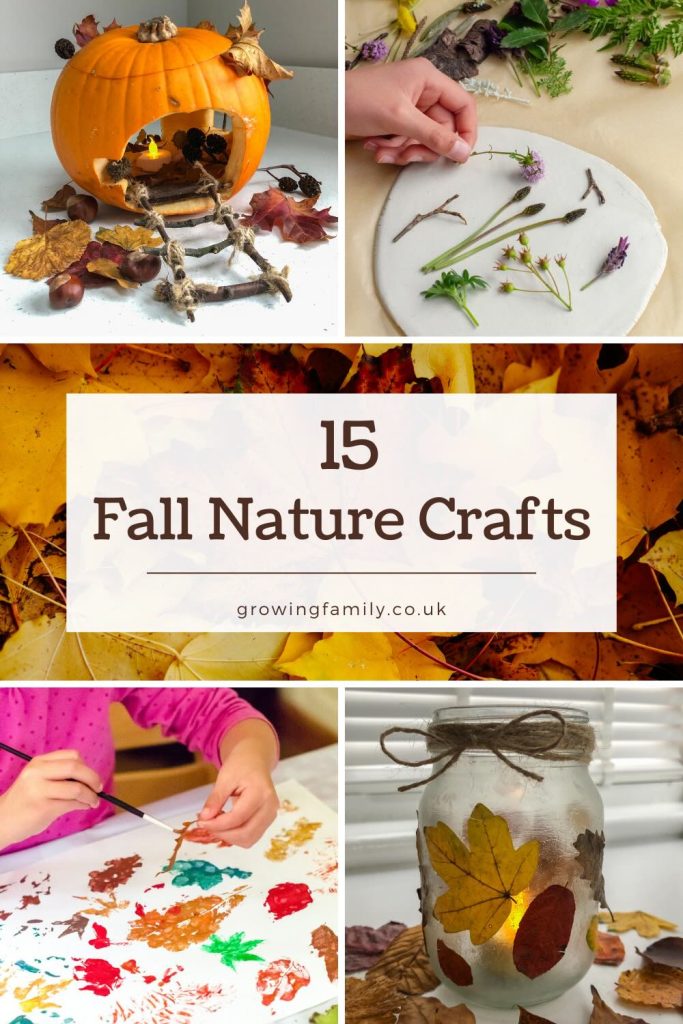


Pin for Later: Conker Crafts & Games
🌿 Love Nature Play?
Join our Facebook group for easy nature craft and play ideas for kids.
Join the Group