How to Make a Nature Sound Map: A Fun Listening Activity for Kids
A nature sound map is a simple, screen-free outdoor activity where kids sit quietly in nature, listen for sounds, and draw or mark each one on a paper map to show where it came from.
Making a nature sound map: at a glance
| Activity | Make a nature sound map – a listening and drawing activity |
| Suitable for | Ages 4+ (younger children may need support; older children can do it independently) |
| Time needed | 10–20 minutes |
| Difficulty | Easy |
| Where | Anywhere outdoors: garden, park, beach, woodland, or even your street |
| Cost | Free (just paper and a pencil) |
We spend so much of our time looking at the world that it’s easy to forget about listening to it. But step outside almost anywhere and you’ll find nature is full of sound, if you stop long enough to notice it.
A nature sound map is a lovely, screen-free activity that gets kids tuning in to the world around them. All you need is a scrap of paper, something to draw with, and a few quiet minutes outdoors. It’s one of those wonderfully simple nature activities for kids that costs nothing, needs no preparation, and works just as well in a back garden as it does on a woodland walk or a day at the beach.
Making a sound map is also a sneaky bit of mindfulness in disguise. Tuning in to what you can hear is a classic way to anchor yourself in the present moment, and children often find it easier to sit still and focus when they’ve got a job to do (like listening for sounds to add to their map) rather than being asked to “be mindful” in the abstract.
Ready to give it a try? Here’s how to make your own nature sound map.
You will need
- A sheet of paper
- A pen or pencil
- Your ears!
How to make a nature sound map
Time needed: 20 minutes
- Find a quiet spot outdoors
A garden, a park bench, a corner of the beach, or even your own doorstep will all work well. You don’t need anywhere remote or especially “wild”; any outdoor space will have sounds worth discovering.
- Mark yourself on the paper
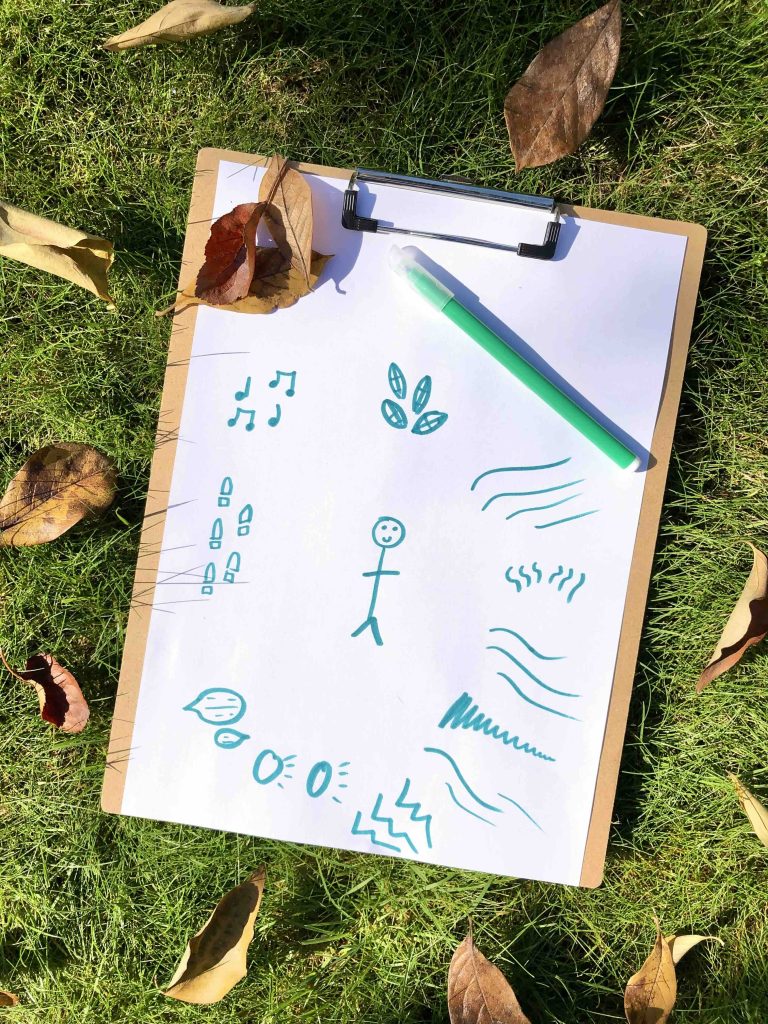
Draw a small figure, or simply write an X, in the centre of the sheet. This spot represents you, and everything you hear will be added around it to build up your map.
- Get comfortable and start listening
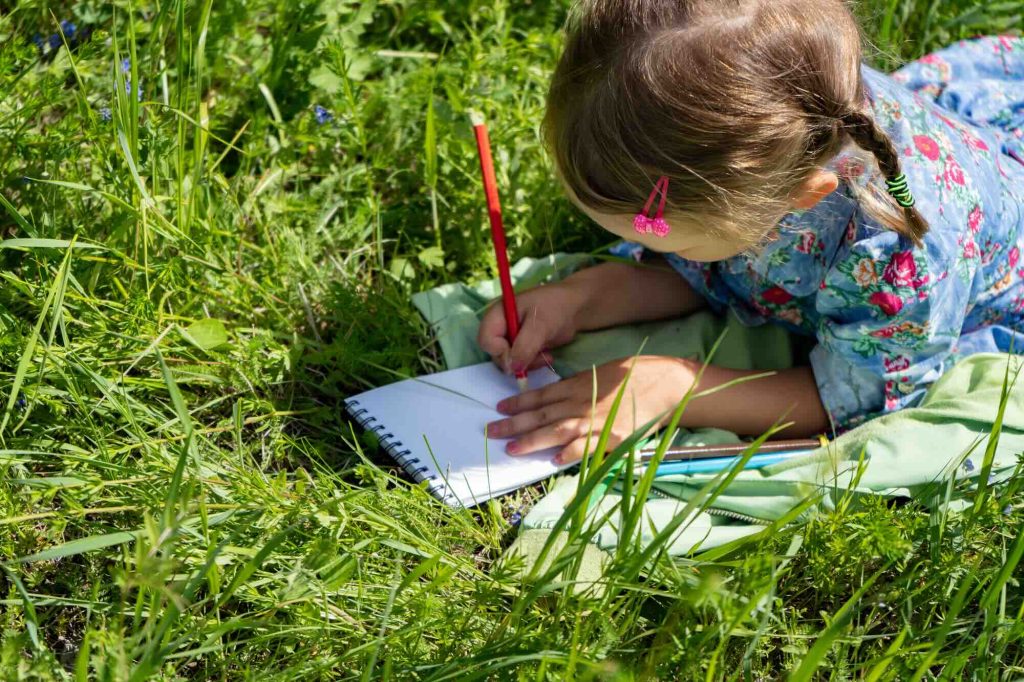
Sit or stand still, and if it helps, close your eyes. Give yourself a minute or two of silence before you begin. Weather, animals, insects, water and people all create sound outdoors. Even plants make noise when the wind moves through them or rain lands on their leaves.
- Add each sound to your map as you hear it
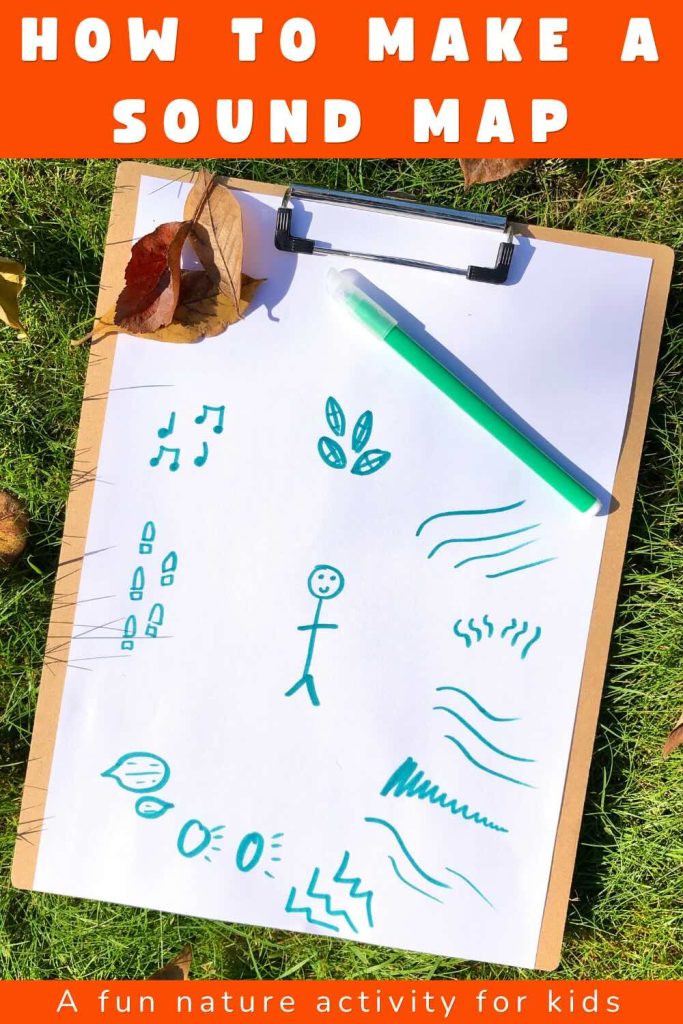
Sketch a small symbol in roughly the direction the sound came from. Musical notes could mean birdsong, wavy lines could mean wind, and dots could mean raindrops. Keep the drawings quick and simple; the point is to keep listening, not to create a masterpiece. Man-made sounds like traffic or voices count too.
- Pause and reflect
Once your map feels full, take a moment to notice how sitting and listening made you feel.
Not sure what to listen for? Press play on this short clip of woodland sounds to get your ears warmed up before you head outside:
Questions to explore after you’ve made your sound map
- Are you surprised by anything on your map?
- How many of these sounds do you think you’d usually notice, if you weren’t paying close attention?
- Did you hear anything you couldn’t actually see?
- Can a friend or grown-up guess what each symbol on your map represents?
- Which sound on your map do you think travelled the furthest to reach you?
- Was there a sound you found calming? Was there one you found annoying?
- If you had to pick just one sound to listen to again, which would it be, and why?
- Could you hear more than one sound at the same time? What did that feel like?
Variations to try
- Try different seasons. Make a sound map in the same spot in spring, summer, autumn and winter, and compare them. What’s changed? What’s stayed the same?
- Try different times of day. A dawn sound map will look very different to one made at midday or dusk.
- Try it in the dark. Making a sound map after nightfall (somewhere safe and familiar, with a grown-up close by) is a great way to notice how much sharper your hearing becomes when you can’t rely on your eyes. If you’d like to turn this into a longer activity, you could even try a listening walk.
- Try it in the rain. Wet weather brings a whole new set of sounds, from raindrops on leaves to the patter on an umbrella.
- Swap locations with a friend. Make maps in two different places at the same time, then compare notes about what you each heard.
- Turn it into a memory game. After making your map, put it away and see how many sounds you can recall from memory alone.
- Add colour. Use different colours for natural sounds versus man-made sounds, and see which category takes up more of the page.
Frequently Asked Questions
A nature sound map is a simple drawing activity where a child sits outdoors, listens to the sounds around them, and marks each sound on a piece of paper in the direction it came from, building up a visual “map” of everything they can hear.
It works well from around age 4 upwards. Younger children may need a grown-up to help with drawing or to sit alongside them, while older children can usually manage the activity independently.
Most children complete a sound map in 10–20 minutes, though there’s no time limit. Some children like to keep adding to their map for much longer.
No. A garden, balcony, park bench or even a doorstep all work well. Part of the fun is discovering how much there is to hear in places you already know.
Yes. Focusing on sound is a well-known mindfulness technique, because it anchors attention in the present moment. A sound map gives children a simple, hands-on way to practice this without needing to understand the concept of mindfulness first.
Encourage simple symbols rather than detailed pictures. A squiggle, a dot, or a scribble is enough. The goal is to keep listening, not to produce neat artwork.
Final thoughts
A nature sound map is proof that you don’t need any equipment, screens or special outdoor knowledge to enjoy a rewarding nature activity with kids. All it takes is a sheet of paper and a few quiet minutes, and children come away having noticed sounds they’d normally tune out entirely – along with a calmer, more focused mind. It’s a brilliant one to keep in your back pocket for rainy park benches, long car-journey stops, or lazy afternoons in the garden, any time you fancy some screen-free outdoor play.
More nature activities for kids
For more nature craft and play ideas, take a look at these posts:


Pin for later: how to make a nature sound map